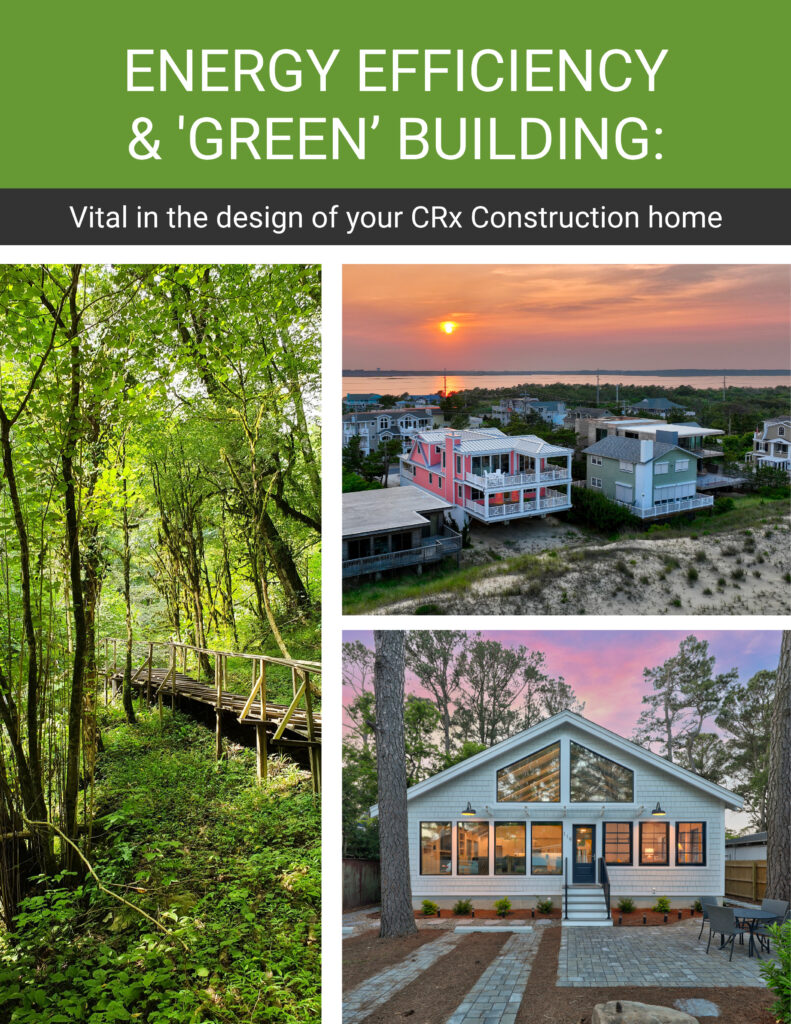
Energy efficient homes in Delaware use less energy, last longer and need fewer repairs in a harsh coastal climate. A truly sustainable home on the Delaware coast starts with a tight, well-insulated envelope and durable materials, then adds efficient heat pumps, smart ventilation and, where the roof and lot allow it, solar.
That order matters. Many homeowners start the conversation with solar panels or geothermal wells because they are the visible part of “green.” In practice, the decisions that save the most energy and money over the life of a beach house are the ones you never see once the drywall is up. This guide walks through what actually pays off when you build a sustainable custom home in coastal Sussex County, what is mostly marketing, and how to plan it without losing the design you want.

What “Sustainable” Really Means for a Coastal Home
On an inland lot, a sustainable home is mostly about energy. On the coast, it is also about durability. Salt air, wind-driven rain, humidity and flood risk wear a house down faster than almost anywhere else in the region. A home that needs a new deck, new windows and new siding every twelve years is not sustainable, no matter how efficient its HVAC system is.
So when we talk about sustainable homes in Delaware, we mean three things working together:
- Energy performance: a home that needs very little energy to stay comfortable year-round.
- Durability: materials and details that hold up to salt, sun and storms for decades, which keeps replacement waste out of the landfill.
- Healthy air: controlled fresh air and humidity, which matters more in a tight, coastal house than most owners expect.
Get those three right and the home is greener, more comfortable and cheaper to own. Skip one and the others suffer.
Start With the Envelope, Not the Gadgets
The building envelope is everything that separates inside from outside: foundation, walls, roof, windows and doors. It is the single biggest factor in how much energy a home uses, and it is the hardest part to upgrade later.
A strong envelope on the coast means continuous insulation, careful air sealing at every penetration, and high-performance windows rated for the wind zone. Delaware is also tightening its rules here. Sussex County is moving to the 2024 International Energy Conservation Code, and we cover what that changes in our guide to the Sussex County energy code. A sustainable home simply goes further than the code minimum on purpose.
The logic is simple. Every dollar spent on air sealing and insulation lowers the size of the heating and cooling equipment you need, for the life of the house. Equipment wears out and gets replaced. A well-built wall does not.
Heat Pumps and HVAC Built for the Coast
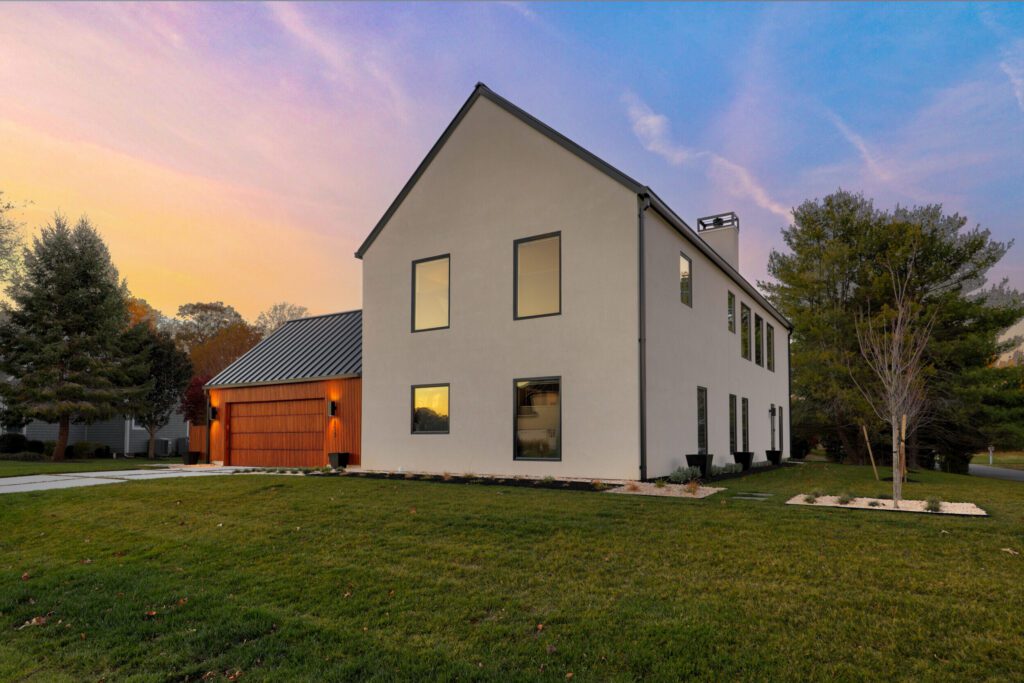
Modern air-source heat pumps handle the mild coastal Delaware climate very well, and they have become the standard choice for efficient new homes. They heat and cool with electricity, which pairs naturally with solar, and today’s cold-climate models keep working efficiently through a typical Sussex County winter.
Two coastal details make a real difference:
- Outdoor unit placement and protection. Salt air corrodes coils and cabinets. Coastal-rated or coated equipment, mounted above flood elevation and away from direct spray, lasts noticeably longer.
- Humidity control. A tight house in a humid climate needs a plan for moisture. Right-sized equipment, dedicated dehumidification where needed, and good duct design keep the air comfortable and protect finishes and furniture.
Ducts belong inside the conditioned space, not in a hot attic. It sounds like a small decision, but it is one of the most cost-effective efficiency choices in a new build.
Is Geothermal Worth It on the Delaware Coast?
Geothermal heat pumps use the stable temperature of the ground to heat and cool the home. They are extremely efficient and quiet, and the outdoor equipment is minimal, which is appealing on a tight beach lot.
Whether geothermal makes sense depends on the site. Lot size, soil conditions, the water table, local well rules and access for drilling equipment all matter, and many coastal lots in Rehoboth Beach or Dewey Beach are small and close to neighbors. On larger lots, geothermal can be an excellent long-term choice for a primary residence or a home that will be used year-round.
The economics changed recently. The federal Residential Clean Energy Credit (Section 25D), which covered 30% of geothermal and solar costs, ended for systems placed in service after December 31, 2025. That does not make geothermal a bad decision, but it does mean the payback should be evaluated on its own merits, without assuming that federal credit.
Solar on a Beach House
Solar works well in Delaware, and a new custom home is the best time to plan for it. Roof orientation, pitch, shading, and the placement of vents and skylights can all be designed around a future array, even if the panels go up later.
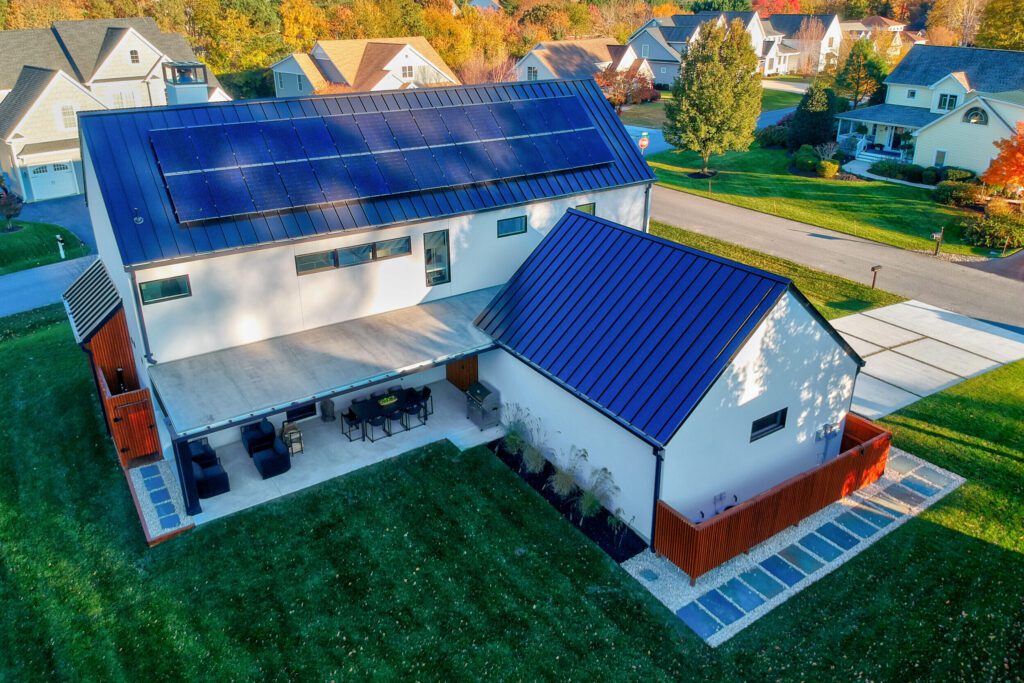
For coastal homes, the details are about wind and corrosion: racking and fasteners rated for the wind zone and salt exposure, and roof penetrations detailed so they do not become leaks. If you are building in a flood zone, inverters, batteries and electrical equipment need to sit above the design flood elevation. Our article on building in a Delaware flood zone explains how elevation requirements shape these decisions.
Delaware’s Green Energy Program offers grants toward renewable systems through the electric utilities, including Delmarva Power and the Delaware Electric Cooperative, and the state uses net metering. Program rules and amounts change, so we always confirm current incentives with the homeowner’s utility before a decision is made.
Durable, Low-Maintenance Materials Are a Green Choice
The greenest material is the one you do not have to replace. On the coast, that means choosing cladding, roofing, decking, windows and fasteners for how long they survive salt air, not only for how they look on day one.
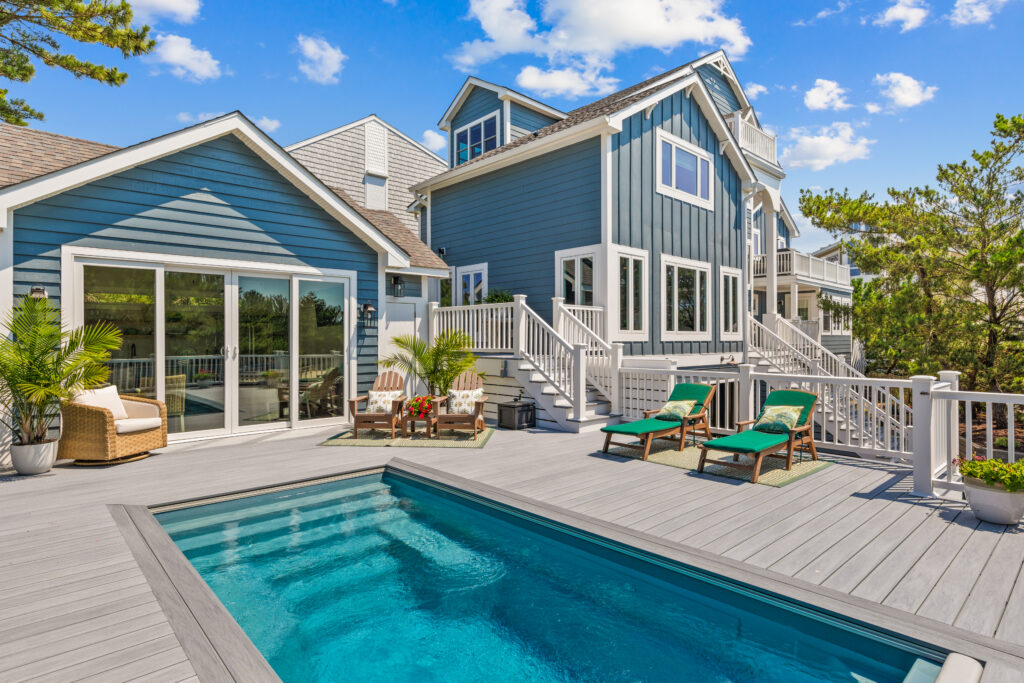
Fiber cement and other engineered sidings, stainless steel or properly coated fasteners, impact-rated windows and well-detailed flashing all extend the life of the home. We go component by component in our guide to coastal home building materials. Choosing well here reduces maintenance trips, repaint cycles and the waste that comes with tearing out failed materials.
Locally available materials and finishes also help. They shorten supply chains, reduce shipping, and are usually easier to repair or match years from now.
Fresh Air, Healthy Air
A tight house needs mechanical ventilation. An energy recovery ventilator (ERV) brings in fresh outdoor air and exhausts stale air, while transferring heat and moisture between the two streams. In a humid coastal climate, that helps keep indoor humidity in check while keeping the energy penalty of fresh air low.
Pair that with low-VOC paints, adhesives and finishes, and the result is a home that feels fresh when you open it up for the weekend, instead of musty after a week closed up.
Water, Landscape and the Lot
Sustainability does not stop at the walls. Coastal lots benefit from native, salt-tolerant planting that needs little irrigation, permeable paving that lets rainwater soak in instead of running off, and drainage planned around the site’s grade and flood exposure. Inside, efficient fixtures and a well-planned hot water system cut both water and energy use.
These choices also protect the bays and inland waterways that make the Delaware coast worth building on in the first place.

Sustainable Features for a Coastal Delaware Home
How the most common green features compare on a beach-area custom home, from the decisions that pay off first to the ones that depend on the site.
| # | Feature | What It Does | Coastal Considerations |
|---|---|---|---|
| 1 | Air sealing and insulation | Cuts heating and cooling loads for the life of the home | Highest return; very hard to upgrade later |
| 2 | High-performance windows | Reduces heat loss and gain, improves comfort | Must also meet wind-zone and impact requirements |
| 3 | Air-source heat pump | Efficient all-electric heating and cooling | Use coastal-rated units, mounted above flood elevation |
| 4 | ERV ventilation | Fresh air with low energy loss | Helps manage humidity in a tight beach house |
| 5 | Durable cladding and fasteners | Extends the life of the exterior | Salt-resistant materials cut replacement waste |
| 6 | Solar-ready roof or solar array | Produces on-site electricity | Wind-rated racking; equipment above flood elevation |
| 7 | Geothermal heat pump | Very efficient heating and cooling from the ground | Depends on lot size, soils, water table and access |
| 8 | Native, low-water landscape | Reduces irrigation and runoff | Salt-tolerant plants and permeable paving |
What a Sustainable Home Costs, and What It Returns
Building green does not have to mean building expensive. The envelope and ventilation upgrades that deliver most of the benefit usually add a modest share to a luxury coastal build, and they lower the size of the mechanical systems you need. Solar and geothermal are larger, separate investments whose payback depends on the site, how often the home is used, and the incentives available at the time.
The bigger picture is total cost of ownership: lower utility bills, fewer repairs, longer-lasting exteriors and a more comfortable home. Those savings matter even more for a second home that sits empty part of the year. If you are budgeting a new build, our guide to how much it costs to build a house in Delaware shows where sustainable upgrades fit in the overall number.
Second Homes and Rentals: Does Green Still Make Sense?
Many of our clients are building a weekend or vacation home on the coast, often from Washington, Baltimore, Philadelphia or New York. A sustainable home fits that use well. Smart thermostats and remote monitoring let you set back the house when nobody is there, and humidity control protects the home while it is closed up. If you are planning a second home in Delaware, these systems also make it easier to manage from a distance.
For homes that will be rented, durable materials and efficient systems reduce maintenance calls between guests and keep operating costs predictable.
How CRx Construction Builds Sustainable Homes
At CRx Construction, sustainability is part of the design conversation from the first meeting, not an add-on at the end. Through our 5 Simple Steps™ process, Dion Lamb and our team look at the lot, the way you plan to use the home, and your budget, then recommend the features that will actually pay off for that site. Sometimes that includes geothermal or a full solar array. Often the biggest wins are the envelope, the HVAC design and the exterior materials.
As custom home builders in Delaware with decades of experience on the coast, we have seen which details hold up and which do not. You can see the kind of homes we build in our portfolio, and if you want to go deeper before we meet, download our free guide to green building goals for your luxury home.
Sustainable Homes in Delaware FAQ
What makes a home energy efficient and sustainable in Delaware?
+
An energy efficient, sustainable home in Delaware uses little energy, lasts a long time and keeps indoor air healthy. On the coast, that means a tight, well-insulated envelope, efficient heat pumps, mechanical ventilation with humidity control, and durable materials that resist salt air and storms, with solar or geothermal added where the site supports them.
Is it more expensive to build a green home on the Delaware coast?
+
The upgrades that deliver most of the benefit, such as better insulation, air sealing, high-performance windows and ventilation, usually add a modest share to a luxury custom build and reduce the size of the HVAC system. Solar and geothermal are larger, separate investments whose payback depends on the site and current incentives.
Does geothermal work for beach homes in Sussex County?
+
It can, but it depends on the lot. Geothermal needs room for wells or loops, suitable soil and groundwater conditions, and access for drilling equipment. Larger lots and year-round homes are the best fit. Many small beach lots are better served by high-efficiency air-source heat pumps.
Is the federal solar and geothermal tax credit still available?
+
The federal Residential Clean Energy Credit (Section 25D), which covered 30% of solar and geothermal costs, ended for systems placed in service after December 31, 2025. Delaware still offers Green Energy Program grants through the electric utilities, so it is worth checking current programs with your utility before you decide.
Can I add solar panels to a home in a flood zone?
+
Yes. Rooftop solar works in flood zones, but inverters, batteries and other electrical equipment must be placed above the design flood elevation. Racking and fasteners should also be rated for coastal wind and salt exposure, and roof penetrations need careful flashing to prevent leaks.
What is the most important green feature in a new coastal home?
+
The building envelope. Continuous insulation, careful air sealing and good windows reduce energy use for the life of the home and are very difficult to improve later. Getting the envelope right also lets you install smaller, less expensive heating and cooling equipment.
Do sustainable homes make sense as second homes?
+
Yes. Efficient systems, smart thermostats and humidity control protect a home that sits empty part of the year and let owners manage it remotely. Durable, low-maintenance materials also reduce repair visits, which is especially valuable when you live a few hours away.
What is a net-zero home?
+
A net-zero home produces about as much energy over a year as it uses, usually by combining a very efficient envelope and heat pumps with solar panels. On the Delaware coast it is achievable when the roof, orientation and lot allow for enough solar, and when the envelope is designed for very low energy use from the start.
Why do durable materials count as sustainable?
+
Every time siding, decking or windows fail and get replaced, the old materials end up as waste and new ones must be made and shipped. On the Delaware coast, choosing salt-resistant cladding, fasteners and windows extends the life of the home and avoids those repeated replacement cycles.
Build a Home That Works as Hard as You Do
A sustainable home on the Delaware coast is not about chasing every green feature. It is about making the right decisions in the right order, for your lot and the way you will live there. If you are thinking about building, schedule an Idea Session with CRx Construction and we will walk through what makes sense for your site, your goals and your budget.

Dion Lamb is the founder and President of CRx Construction, a luxury custom home builder and remodeler serving Rehoboth Beach, Dewey Beach, Lewes, Bethany Beach, and Fenwick Island, Delaware. Since founding CRx in 2016, Dion has led the firm to a #1 Houzz ranking in Rehoboth Beach and Dewey Beach and a 5-star reputation, guiding homeowners through his trademarked “5 Simple Steps” design-build process. CRx is a member of NAHB, the Home Builders Association of Delaware (HBADE), and the Certified Luxury Builders Network, and a Regal Award winner for Best Luxury Custom Home Design.