The cost to build a house in Delaware is set by five things: the land and what it requires before you can build on it, the size and complexity of the design, the level of finish you choose, the coastal requirements your site triggers, and current material and labor conditions. On the Delaware coast, the same square footage can carry very different price tags depending on flood elevation, soil, and how far the utilities have to run — which is why a real number comes from a site, not a calculator.
That answer frustrates people who want a figure today. So here is what actually moves the number, what makes building on the coast different from building inland, and how to get a range you can plan around.
Why No Honest Builder Quotes You a Price Per Square Foot
Price per square foot is the most requested and least useful number in custom home building. It averages away every variable that matters. Two homes of identical size on the same street in Rehoboth Beach can differ by hundreds of thousands of dollars because one sits in a flood zone requiring an elevated foundation and the other doesn’t, or because one has a simple roofline and the other has five.
A builder who gives you a confident per-square-foot number before seeing your lot is either quoting a spec home or quoting something they will revise later. We would rather give you an accurate range after understanding your site and your priorities — which is exactly what the first step of our process is designed to do.
The Five Factors That Drive What Your Home Costs
1. Your land and what it demands. This is the most underestimated line item. Clearing, grading, soil conditions, percolation results, well and septic where applicable, utility runs, and drainage all vary enormously between parcels. A lot that looks identical to its neighbor can carry a very different site-work bill. If you haven’t purchased yet, our guide to buying land and building a house covers what to check first.
2. Size and complexity of the design. Square footage matters, but shape matters more than most people expect. Corners, roof planes, changes in elevation, cantilevers and long spans all add structure and labor. A 4,000-square-foot home with a simple footprint costs meaningfully less than a 4,000-square-foot home with a complicated one.
3. The level of finish. This is where the range widens most, and where you have the most control. Cabinetry, countertops, flooring, tile, plumbing fixtures, lighting, millwork and windows can each swing a budget substantially. Our process addresses this directly with a written allowances chart, so you can see what you’re spending where before construction starts rather than discovering it during.
4. What the coast requires. Building near the water triggers requirements inland projects never see — and they are not optional. More on this below.
5. Market conditions and timeline. Material pricing and trade availability move. A project that starts in a busy season prices differently than one scheduled with lead time. This is also why rushing a build rarely saves money.
What Actually Sets the Price
The five factors behind every custom home budget on the Delaware coast.
| # | Cost Factor | What Drives It | Where You Have Leverage |
|---|---|---|---|
| 01 | Land & Site Work | Clearing, grading, soil and percolation, well and septic, utility runs, drainage. Varies enormously parcel to parcel. | ✓Evaluate the lot before you buy or before design begins. |
| 02 | Size & Complexity | Square footage, but also corners, roof planes, spans and changes in elevation. Shape costs more than people expect. | ✓Simplify the footprint without sacrificing how it lives. |
| 03 | Level of Finish | Cabinetry, counters, flooring, tile, fixtures, lighting, millwork and windows. The widest swing in any budget. | ✓A written allowances chart before construction starts. |
| 04 | Coastal Requirements | FEMA flood elevation, impact-rated windows, corrosion-resistant hardware, wind-rated roofing, enhanced drainage. | ✓Know your flood zone before you design, not after. |
| 05 | Market & Timeline | Material pricing, trade availability, and the season your project starts in. | ✓Give the schedule lead time instead of rushing it. |
What Coastal Delaware Adds That Inland Building Doesn’t
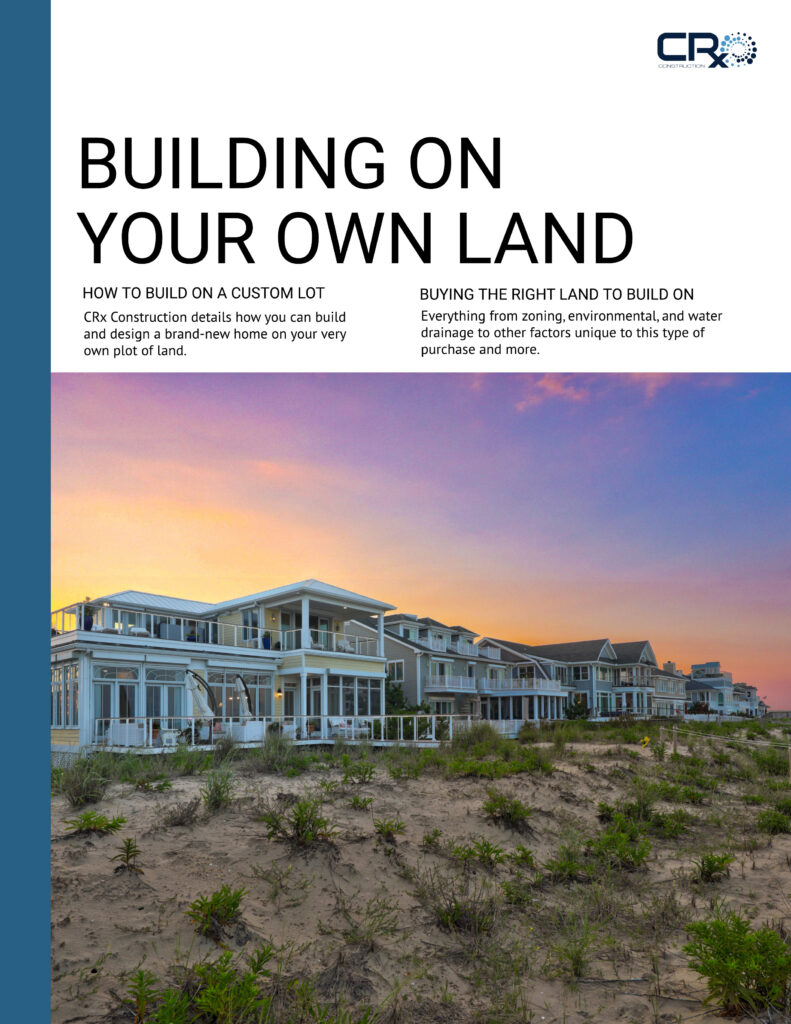
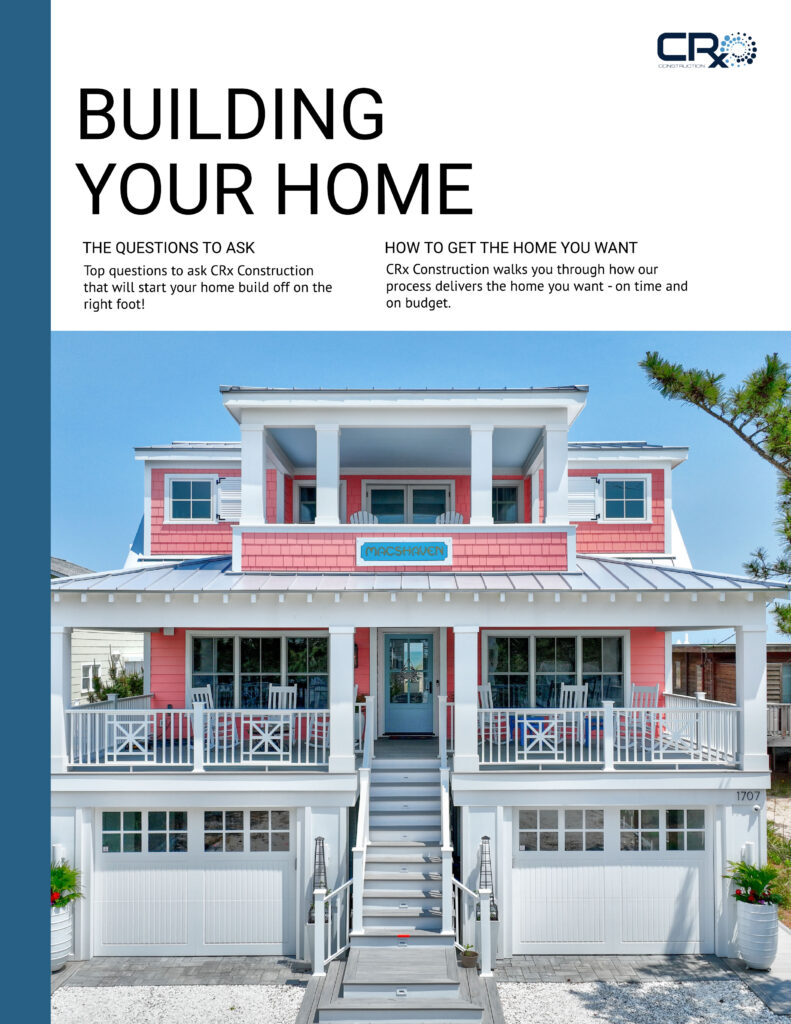
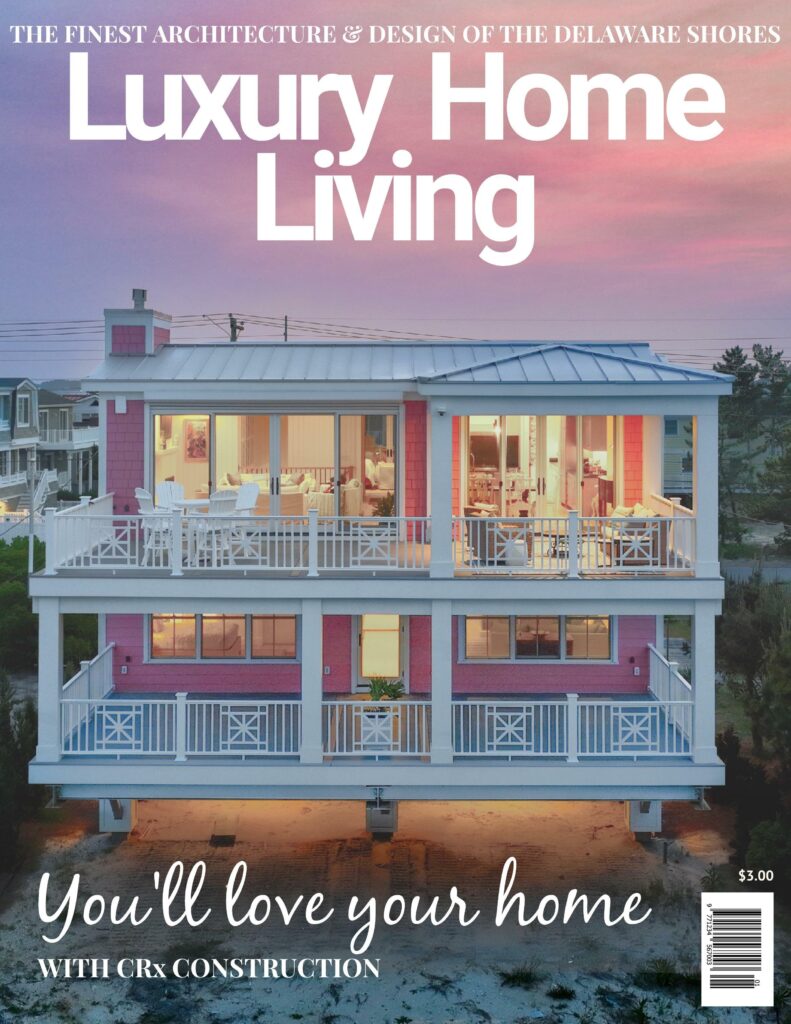
Flood elevation. If your lot sits in a FEMA AE or VE zone — common throughout Dewey Beach, Bethany Beach and Fenwick Island — the finished floor must sit at or above base flood elevation. That changes foundation type, stair and entry design, and parking, and it follows the home into your insurance premiums for as long as you own it.
Materials that survive salt air. Standard fasteners corrode. Standard hardware fails early. Impact-rated windows, stainless and coated hardware, and cladding chosen for a marine environment all cost more than their inland equivalents — and skipping them costs far more over the life of the home. This is the difference between a house that photographs well at the ribbon cutting and one that still performs in fifteen years.
Permitting time. Sussex County permitting, municipal review, DNREC coordination and flood compliance documentation all take time. Time is not a line item on a bid, but a stalled project absolutely costs money.
One Way Delaware Costs Less
Delaware has no state sales tax. On a custom home, materials represent a large share of the total, so building here costs measurably less than building the identical home in Maryland, New Jersey or Pennsylvania. Combined with Delaware’s comparatively low property taxes, the ownership math is one of the quiet reasons the coast attracts buyers from Washington, Baltimore, Philadelphia and New York. We cover the wider picture in our guide to building a home in Delaware.
Where Custom Home Budgets Actually Go Wrong
In our experience, budgets rarely fail because of the headline construction number. They fail in three predictable places.
Site work nobody scoped. The single most common surprise. It is also entirely avoidable by evaluating the parcel before design begins.
Selections made without allowances. When a homeowner picks finishes without a written allowance to measure against, the overage isn’t visible until it has already happened several times over.
Changes made after construction starts. A change on paper is a conversation. The same change during framing is a cost. This is why our process front-loads decisions rather than deferring them.
How We Establish Your Actual Number
We don’t hand you a figure and revise it later. The number is built in stages through The 5 Simple Steps™: an initial investment range in the first conversation, refined against a real floor plan with a written allowances chart, then finalized into a construction agreement before anything is built. You approve the number before we break ground, and you track it in real time through our Buildertrend client portal as we do.
If you want to understand the calculation method itself, our companion piece walks through how to calculate the cost to build a house. And if you already own land, building on your lot changes the math — because the biggest variable is already settled.
Cost to Build a House in Delaware FAQ
How much does it cost to build a house in Delaware?
+
Why won't you give me a price per square foot?
+
What is the most underestimated cost when building in Delaware?
+
Does building in a flood zone cost more?
+
Is it cheaper to build in Delaware than in neighboring states?
+
How do you keep a custom home budget from growing?
+
Does owning the land already change the cost?
+
When do I get a firm number?
+
How do I get started?
+
Get a Number Built on Your Site, Not an Average
The most expensive thing you can do is plan around a figure that was never based on your land. A conversation costs nothing and replaces guesswork with something you can actually budget against.
Schedule your Idea Session — our “Let’s Talk”™ step. We’ll review your site, your priorities and your timeline, and give you an honest investment range before you commit to anything. Reach out to Dion and the CRx team, or start with our free planning guides.

Dion Lamb is the founder and President of CRx Construction, a luxury custom home builder and remodeler serving Rehoboth Beach, Dewey Beach, Lewes, Bethany Beach, and Fenwick Island, Delaware. Since founding CRx in 2016, Dion has led the firm to a #1 Houzz ranking in Rehoboth Beach and Dewey Beach and a 5-star reputation, guiding homeowners through his trademarked “5 Simple Steps” design-build process. CRx is a member of NAHB, the Home Builders Association of Delaware (HBADE), and the Certified Luxury Builders Network, and a Regal Award winner for Best Luxury Custom Home Design.