Can you build a basement in coastal Delaware? Technically yes, but it is rare, and usually for good reason. The high water table across coastal Sussex County and the flood rules that govern below-grade space make full basements impractical for most beach-area homes. In their place, crawl spaces, slabs and elevated foundations do the job better.
It is one of the first questions many out-of-state buyers ask, especially those coming from places where a finished basement is standard. The honest answer takes a minute to explain, because it is less about whether a basement is possible and more about whether it is wise on a given coastal lot. Here is how a builder who works on the Delaware shore thinks it through.
The Short Answer: Uncommon, and Usually Avoided
Drive through the neighborhoods near Rehoboth, Dewey or the bays and you will notice something: almost no basements. That is not an oversight or a corner-cutting habit. It is a direct response to the ground itself and the water beneath it.
A basement is a box you sink into the earth, and near the coast that earth is often saturated. Fighting that water is a constant, lifelong battle, and the flood regulations that protect coastal homes frequently rule out below-grade living space altogether. A seasoned Delaware custom home builder will almost always steer you toward a foundation that works with the site rather than against it.
Why the Sussex County Water Table Works Against Basements
Coastal Sussex County sits on a low, sandy coastal plain, and the water table — the level below which the ground is saturated — is often close to the surface. On many lots near the water, you do not have to dig far before you hit wet ground.
That creates two problems for a basement. First, hydrostatic pressure: standing groundwater pushes constantly against basement walls and the slab, seeking any crack or seam to seep through. Second, buoyancy: an empty concrete box in saturated soil actually wants to float, and without careful engineering it can heave or crack. Keeping a coastal basement dry means fighting physics every day of the home’s life, and even then, a power outage that stops a sump pump during a storm can undo it all.
Flood Zones and Below-Grade Living Space
When asking can you build a basement in coastal Delaware, the water table is only half the story. Much of coastal Delaware lies within FEMA-mapped flood zones, and the rules that come with them are strict about anything below the base flood elevation.
In these zones, living space below grade is generally not permitted, and a below-grade basement typically cannot be insured under a standard flood policy. Instead, the regulations push habitable space up, above the base flood elevation, so that floodwater has somewhere to go without ruining the home. Building in a flood zone means designing the foundation around that requirement from the start, which is a core part of building responsibly on the Sussex County coast.
What Happens When You Force a Basement
For homeowners asking can you build a basement in coastal Delaware, it is not impossible to build a basement on a higher, drier coastal lot with serious engineering, but forcing one where the water table is high invites a lifetime of maintenance. The home needs robust waterproofing, exterior drainage, a reliable sump system and often a backup power source to keep it running when the grid goes down.
Even done well, it is a system that can fail, and the consequences show up as a wet, musty, unusable space exactly when you least want it — during a coastal storm. For most homeowners, the smarter move is to put that same effort and investment into space that stays dry and usable. The alternatives below do exactly that.
The Alternatives That Actually Work
The practical answer to can you build a basement in coastal Delaware depends on the lot. Coastal Delaware homes get their storage, mechanical space and square footage through foundations and layouts suited to the environment. Each has its place depending on the lot, the elevation and the flood zone.
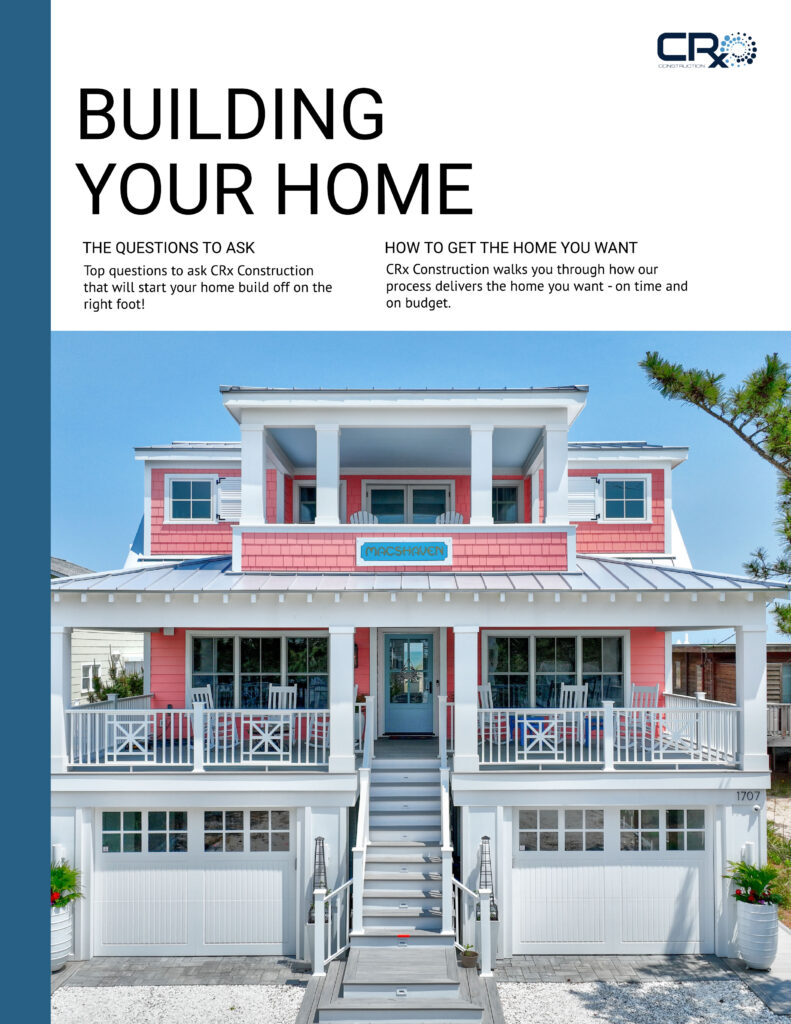
A conditioned crawl space raises the home slightly and creates a sealed, climate-controlled cavity for mechanical systems and storage, without the risk of a full basement. A slab-on-grade foundation sits the home at ground level with no cavity to flood, simple and durable where elevation allows. On lower, flood-prone lots, an elevated foundation on pilings or piers lifts the living space above the flood level and turns the ground level into parking, storage or a covered outdoor area — designed to let floodwater pass through. And a raised first floor, whatever the foundation, keeps the living space high and dry. You can see these approaches at work across our custom homes.
Foundation Options for Coastal Delaware
How the common alternatives to a basement handle the coastal water table and flood rules.
| No. | Foundation | How It Handles the Water Table | Best Fit |
|---|---|---|---|
| 01 | Full basement | Fights groundwater constantly; risky | Rare — only high, dry lots |
| 02 | Conditioned crawl space | Sits above grade; sealed and dry | Mechanicals and storage, many lots |
| 03 | Slab-on-grade | No cavity to flood; simple, durable | Where elevation allows at grade |
| 04 | Piling / elevated | Lifts living space above flood level | Low, flood-prone coastal lots |
| 05 | Raised first floor | Keeps habitable space high and dry | Flood zones, added peace of mind |
| 06 | Above-garage bonus space | Fully above grade; no water risk | Extra rooms without going below |
Getting the Space a Basement Would Provide
Most buyers who ask about a basement are really asking for what it represents: storage, mechanical space, and room to spread out. On the coast, you get all of that without going underground.
A conditioned crawl space or a dedicated utility room handles the mechanicals. Thoughtful built-ins, generous closets, a walk-in pantry and a mudroom absorb the storage. And a bonus room over the garage or a well-planned main level provides the extra living space — often more pleasant than a basement because it has windows and light. Designed well, a coastal home never feels like it is missing anything, which is a hallmark of true craftsmanship in how the plan uses every square foot.
When a Basement Might Still Make Sense
The question can you build a basement in coastal Delaware has exceptions. On a higher-elevation lot farther from the water, where the ground is drier and the water table sits well below the footings, a basement can occasionally be built and kept dry with proper engineering. Some inland parts of Sussex County offer that kind of ground.
The only way to know is a real evaluation of the specific lot — its elevation, its soil, its water table and its flood zone. That is why the right foundation is a site-by-site decision, not a rule of thumb, and it is one of the first things worth confirming as you weigh a parcel or review available land in Delaware.
How CRx Chooses the Right Foundation
When evaluating can you build a basement in coastal Delaware, CRx Construction starts the foundation decision starts with the site, never with an assumption. We evaluate the lot’s elevation, soil and flood zone before recommending an approach, so the home is built on a foundation that will stay sound and dry for its lifetime.
Our founder, Dion Lamb, has built across the Delaware coast long enough to know that respecting the water is what keeps a home healthy. The 5 Simple Steps™ process brings that judgment into the design early, so whether you are building new in Rehoboth Beach or reworking an older home through a home remodeling project, the foundation fits the ground it sits on.
Coastal Delaware Basement FAQ
Can you build a basement in coastal Delaware?
+
Technically yes, but it is rare and usually avoided. The high water table across coastal Sussex County and the flood rules that govern below-grade space make full basements impractical for most beach-area homes. On a higher, drier lot it can occasionally be done with serious engineering, but most coastal homes use crawl spaces, slabs or elevated foundations instead.
Why don’t coastal Delaware homes have basements?
+
Two reasons. The coastal plain has a high water table, so groundwater pushes against basement walls and can even make an empty basement want to float. And most coastal lots sit in flood zones, where living space below the base flood elevation is generally not allowed and cannot be insured under a standard flood policy. Together, those make basements impractical.
What is the water table like in Sussex County?
+
Coastal Sussex County sits on a low, sandy coastal plain where the water table is often close to the surface, especially near the ocean and bays. On many lots you do not have to dig far before hitting saturated ground. That high water table is the main physical reason full basements are so uncommon along the Delaware coast.
What foundation is used instead of a basement?
+
Coastal Delaware homes commonly use a conditioned crawl space, a slab-on-grade, or an elevated foundation on pilings or piers. The right choice depends on the lot’s elevation and flood zone. Crawl spaces and slabs suit higher ground, while pilings lift the living space above the flood level on lower, flood-prone lots.
Where do I get storage without a basement?
+
Through smart design. A conditioned crawl space or utility room holds mechanicals, while built-ins, generous closets, a walk-in pantry and a mudroom handle storage. A bonus room over the garage adds living space with windows and light. Designed well, a coastal home provides everything a basement would, without the water risk.
Can a basement be built on a higher inland lot in Sussex County?
+
Sometimes. On a higher-elevation lot farther from the water, where the ground is drier and the water table sits well below the footings, a basement can occasionally be built and kept dry with proper engineering. The only way to know is a real evaluation of the specific lot’s elevation, soil, water table and flood zone.
Are basements risky in a flood zone?
+
Yes. In a flood zone, a below-grade basement is generally not permitted for living space and typically cannot be insured under a standard flood policy. Beyond the rules, it is physically vulnerable: floodwater and a high water table can fill or damage it, often during the very storms when you most need the home to hold up.
How do I know which foundation is right for my lot?
+
It takes a site-specific evaluation of the lot’s elevation, soil, water table and flood zone — not a rule of thumb. A coastal builder assesses those factors before recommending a foundation, so the home is built on something that will stay sound and dry. It is one of the first things worth confirming when you are weighing a parcel.
Does flood insurance cover a coastal basement?
+
Coverage below the lowest elevated floor is limited under many flood policies. When considering can you build a basement in coastal Delaware, confirm the current policy terms, flood zone and elevation requirements with qualified insurance and design professionals.
When should the foundation type be selected?
+
Select it during early site evaluation, before the floor plan is finalized. Answering can you build a basement in coastal Delaware requires current elevation, soil, groundwater and flood-zone information for the specific property.
Download Free Coastal Home-Planning Guides
Explore CRx Construction’s complimentary resources for evaluating lots, foundations and the decisions behind a durable coastal home.
Build on a Foundation That Fits the Coast
For families asking can you build a basement in coastal Delaware, the best answer comes from current site data rather than assumptions. A qualified team can determine can you build a basement in coastal Delaware responsibly before design decisions become expensive to change.
A basement is rarely the right answer on the Delaware shore, but the space, storage and comfort it promises absolutely are — delivered through foundations and layouts designed for the water table and the flood zone. For anyone deciding can you build a basement in coastal Delaware, respecting the ground is what keeps a coastal home dry, healthy and sound for the long haul — the standard behind every home we build in Rehoboth Beach and the coastal towns around it.
To find the right foundation for your lot, call CRx Construction at 302-864-7377 or schedule your Idea Session and start with a real look at the ground you want to build on.

Dion Lamb is the founder and President of CRx Construction, a luxury custom home builder and remodeler serving Rehoboth Beach, Dewey Beach, Lewes, Bethany Beach, and Fenwick Island, Delaware. Since founding CRx in 2016, Dion has led the firm to a #1 Houzz ranking in Rehoboth Beach and Dewey Beach and a 5-star reputation, guiding homeowners through his trademarked “5 Simple Steps” design-build process. CRx is a member of NAHB, the Home Builders Association of Delaware (HBADE), and the Certified Luxury Builders Network, and a Regal Award winner for Best Luxury Custom Home Design.